Kyiv, Ukraine — June 10, 2025 — In one of the most intense bombardments in recent months, Russia launched a series of massive missile and drone strikes on Ukraine’s capital, Kyiv, early Tuesday morning, escalating its ongoing war against Ukraine as the conflict stretches into its third year.
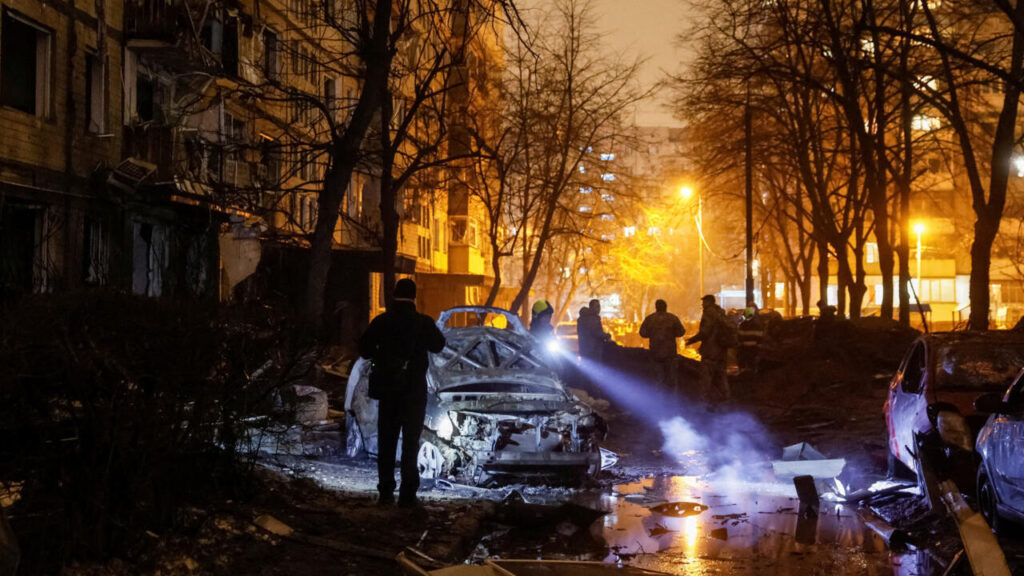
According to Ukrainian officials, more than 60 projectiles—including ballistic missiles, cruise missiles, and Iranian-made Shahed drones—were fired at the city and surrounding areas in the pre-dawn hours. Kyiv’s air defense systems intercepted the majority of the incoming threats, but several missiles managed to penetrate the capital’s defenses, causing significant damage in residential and industrial districts.
At least 12 people were reported killed, with dozens more injured. Emergency services continue to search for survivors under the rubble of collapsed buildings in several neighborhoods, including Shevchenkivskyi and Darnytskyi. Hospitals across the city are overwhelmed with casualties, prompting calls for urgent blood donations and medical supplies.
Targets and Impact
Ukrainian military officials believe the strike was designed to target both civilian infrastructure and critical military sites. Explosions were heard near power substations, railway junctions, and a military logistics hub just outside the city. The Ukrainian Air Force claims it successfully intercepted several Russian Kinzhal hypersonic missiles—a feat made possible through Western-supplied air defense systems such as the U.S.-made Patriot and German IRIS-T systems.
Kyiv Mayor Vitali Klitschko condemned the attack as a “brutal act of terror” aimed at demoralizing the population and disrupting daily life. “Russia is trying to break our spirit,” Klitschko said in a statement. “But we will not be intimidated. Kyiv stands strong.”
Escalation and Timing
The strike comes just days after Ukrainian President Volodymyr Zelensky returned from a European tour during which he secured new pledges of military aid, including long-range weapons and additional air defense systems. Analysts suggest the timing of the Russian barrage may be a response to those developments and Ukraine’s ongoing counteroffensive operations in the eastern Donbas region.
Russian officials, including the Defense Ministry, confirmed the strike and claimed it was aimed at “foreign-supplied weapons storage facilities and decision-making centers.” There was no immediate evidence to support these claims.
International Reaction
The international community responded swiftly. NATO Secretary-General Jens Stoltenberg condemned the strikes as “deliberate and unlawful,” while the European Union reiterated its commitment to supporting Ukraine “for as long as it takes.”
U.S. President Joe Biden, speaking at a press briefing in Washington, called the attack “a stark reminder of Putin’s willingness to escalate” and vowed to expedite delivery of pledged weapons, including F-16 fighter jets expected to arrive in Ukraine later this summer.
The Human Cost
Beyond the military and political ramifications, Tuesday’s assault has added to the mounting toll on Ukraine’s civilian population. With power outages reported across several districts and hundreds displaced due to building damage, Kyiv residents are once again bracing for another long summer of uncertainty and fear.
Despite the destruction, the mood in Kyiv remains one of defiance. Volunteers gathered across the city to assist emergency crews, distribute food, and help with cleanup efforts. “We are not going anywhere,” said 42-year-old teacher Iryna Kovalchuk, whose apartment block was partially destroyed. “This is our home. We will rebuild again.”
As the war shows no sign of abating, Ukraine’s resilience—and the world’s response to the deepening crisis—will likely shape the next phase of this grueling conflict.