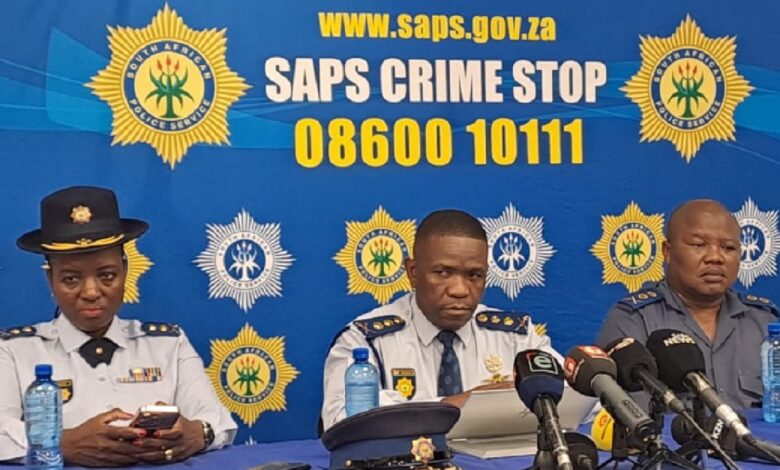
On Sunday, 6 July 2025, KwaZulu‑Natal Police Commissioner Lieutenant‑General Nhlanhla Mkhwanazi held an explosive press conference in Durban, delivering shocking allegations of corruption and political interference within the South African Police Service (SAPS). The briefing, packed with evidence and bold claims, has sparked an immediate political and institutional reaction.
🔍 Key Claims from the Briefing
- Political Interference in Task Team Operations
- Mkhwanazi revealed messages suggesting that Deputy National Commissioner Lt‑Gen Shadrack Sibiya had removed politically sensitive case dockets—125 of them, five targeting arrests—and placed them at national headquarters, allegedly on orders from Police Minister Senzo Mchunu youtube.com+13enca.com+13politicsweb.co.za+13.
- He asserted that the Political Killings Task Team, established in 2018 under a Presidential Inter‑Ministerial Committee, was disbanded in December 2024 just as it was probing a major criminal syndicate in Gauteng iol.co.za+2news24.com+2politicsweb.co.za+2.
- Accusations Implicating the Minister
- Mkhwanazi alleged that WhatsApp messages from businessman Vusimuzi “Cat” Matlala indicate coordination with Minister Mchunu and support for his political ventures, including a gala in Cape Town, with Matlala allegedly holding a R360 million SAPS contract news24.com+1iol.co.za+1.
- He further claimed these communications led to a “solution meeting” to dismantle the task team enca.com+2news24.com+2iol.co.za+2.
- Allegations of a Broader Syndicate
- The commissioner asserted the task team had linked high-ranking politicians, police officers, and prosecutors to an organized crime syndicate—prompting deliberate obstruction by senior officials iol.co.za.
- He pointed to drug-trafficking networks operating through Durban’s port, alleging infiltration into both law enforcement and the judiciary news24.com.
- Defiance from the Decision‑Makers
- Lt‑Gen Shadrack Sibiya termed the allegations as “embarrassing,” denied the claims, and challenged Mkhwanazi to open formal cases rather than going public. He accused Mkhwanazi of violating SAPS protocols facebook.com+13news24.com+13iol.co.za+13.
- Meanwhile, a SAPS ministerial statement labelled the claims “wild allegations” lacking due process and stated they would be reviewed with possible action taken .
⚖️ Political Fallout
- The Democratic Alliance (DA) responded swiftly, requesting an urgent parliamentary debate to address the allegations, accusing the SAPS of lacking integrity and urging investigations into implicated ministers and officials da.org.za.
- Parliament may soon confront the implications if the Speaker approves the DA’s request.
🎙️ What Makes This Press Conference Historic
- From the Special Task Force to Provincial Commissioner:
Mkhwanazi—whose background includes leadership of SAPS’s Special Task Force and a recent stint as Acting National Commissioner iol.co.za+2en.wikipedia.org+2news24.com+2—stepped into the limelight with unprecedented candor, dressed in combat uniform with elite units at his side . - War Metaphor:
Declaring he’s “combat ready” and prepared to “die for the badge,” Mkhwanazi framed the crisis as a war between law enforcement and embedded criminality in government and police ranks iol.co.za.
🔮 What Comes Next
- Formal Investigations or Legal Action
Mkhwanazi called for the demonstrable evidence to prompt legal proceedings, including possibly filing a criminal case against Minister Mchunu da.org.za+10iol.co.za+10youtube.com+10. - Parliamentary Scrutiny
- A potential DA‑initiated sitting could compel national testimony or prompt an ad hoc committee investigation.
- Institutional Integrity of SAPS
- As investigations proceed, the SAPS must reckon with internal dissent and questions around policy versus protocol.
🗂️ Conclusion
Lt‑Gen Mkhwanazi’s presser marks a dramatic escalation in the public discourse on corruption and accountability within South Africa’s law enforcement. Positioning himself as both whistle‑blower and reformist, he has challenged both the political and policing hierarchy. How the SAPS, Parliament, and judiciary respond will determine whether this becomes a pivotal moment in the fight against systemic corruption—or another internal battle lost to bureaucracy.